Scoprite lo splendore di Vienna: Scoprite i tesori artistici del Belvedere Inferiore!
A place with an eternal charm, where history and culture come together in perfect harmony. Walking through its streets feels like diving into an elegant scene, amidst sumptuous palaces, historic cafés, and squares that narrate years of beauty and art. However, Vienna is primarily the City of Music. From the luxury of the Habsburg court to contemporary music, Austria’s capital has been home to and hosted some of the most famous figures in history: Mozart, Beethoven, Schubert, Strauss, and Haydn. These giants of music worked in Vienna, leaving an indelible mark that continues to resonate in concert halls, on the streets, and throughout the city. Here’s what you can visit.
The Lower Belvedere (Unteres Belvedere) is one of the architectural and artistic gems of Vienna. Its construction took place between 1714 and 1716, designed by the architect Johann Lucas von Hildebrandt. It was commissioned by Prince Eugene of Savoy to serve as a private residence. Located in the Landstraße district, this wonderful Baroque palace offers a unique experience, blending architectural elegance, extraordinary artworks, and a fascinating history.
Architecture and Historic Rooms
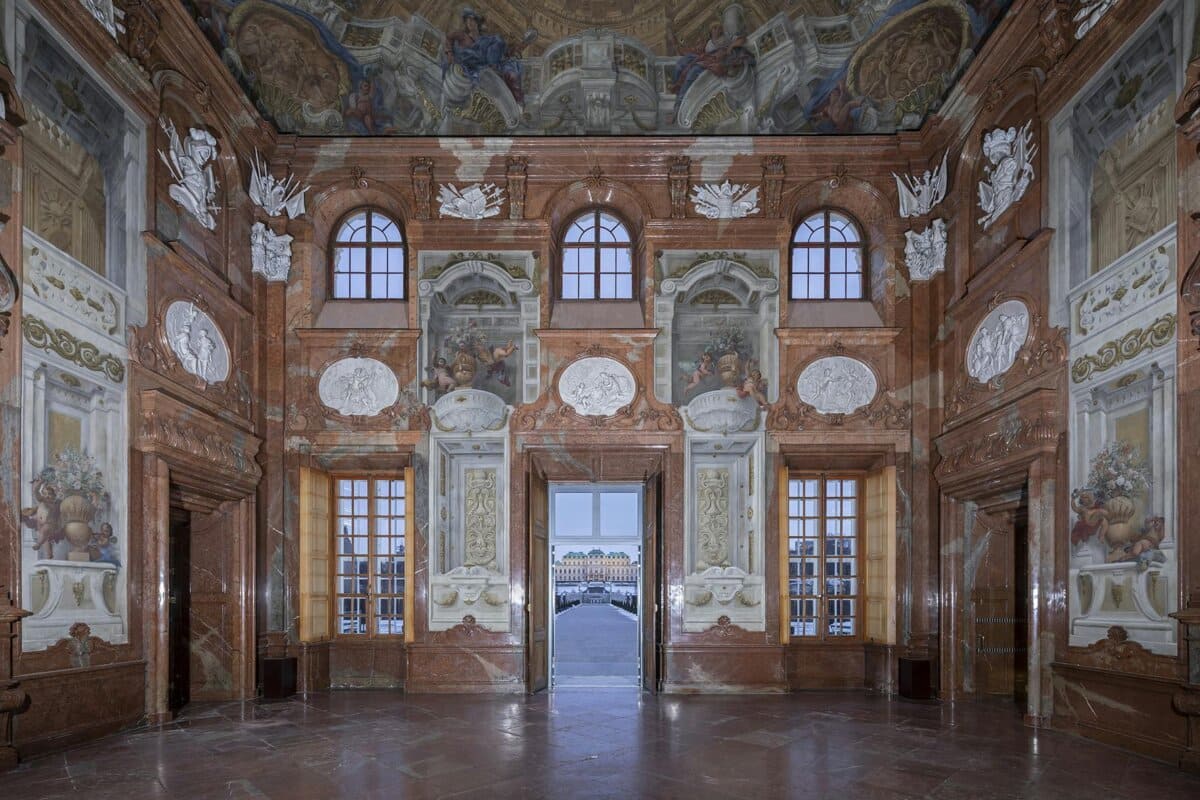
The Lower Belvedere is distinguished by its symmetrical façade and elegant lines, typical of Baroque style. Inside, it features sumptuous rooms, including the Marble Gallery, the Hall of Grotesques, and the Golden Cabinet. The Marble Gallery houses monumental statues and war trophies, celebrating Prince Eugene’s military victories. The Hall of Grotesques is adorned with frescoes representing the four seasons and the natural elements. The Golden Cabinet, richly decorated, reflects the refined taste of the era.
Exhibitions and Collections
Currently, the Belvedere hosts a series of temporary exhibitions that range from medieval to contemporary art. Among the most recent exhibitions are “Gustav Klimt – Pigment & Pixel,” which explores the painting techniques of the famous Austrian artist, and “The World in Colors,” dedicated to 19th-century Slovenian painting. Additionally, the medieval collection offers a deep dive into the art and culture of the Middle Ages.
The History of the Palace
After the death of Prince Eugene of Savoy, the Lower Belvedere underwent several transformations. In the 19th century, the Orangerie was converted into stables, while later, in the 20th century, the building housed various cultural institutions. Today, the palace is part of the Belvedere complex, along with the Upper Belvedere and Belvedere 21, forming an important cultural hub in Vienna.
Gardens and Surroundings
The Lower Belvedere is surrounded by beautiful Baroque gardens designed by Dominique Girard, a pupil of André Le Nôtre, who created the gardens of Versailles. The gardens are terraced and feature fountains, geometrically shaped flowerbeds, and sculptures, offering a panoramic view of the city and creating a harmonious connection between the Lower and Upper Belvedere.
Visiting and Access
The Lower Belvedere is easily accessible by public transport. The nearest subway station is U1 Hauptbahnhof, a 15-minute walk away. Several tram lines, including O, 18, and D, stop nearby. The entrance to the palace is located at Rennweg 6, 1030 Vienna.
Hours and Tickets
The Lower Belvedere is open daily from 10:00 AM to 6:00 PM. Admission prices vary based on age and status, with reduced rates for students, seniors, and holders of the Vienna City Card. Entry is free for children and young people under 19 years old.
Visiting the Lower Belvedere offers a unique opportunity to immerse yourself in the history, art, culture, and Baroque architecture of Vienna. Elegant rooms, wonderful artistic works, and magnificent gardens make it an essential stop for anyone wishing to discover Vienna’s cultural richness.
Lower Belvedere: Entrance ticket
Upper Belvedere Palace: Entry Ticket + Gustav Klimt Permanent Collection
Upper Belvedere Palace: Skip The Line Ticket + Guided Tour
Booking Info
How to Book Your Tickets
Start your adventure by visiting tiqets.com to secure your tickets. With just a few clicks, you can grab your entry to one of Vienna’s architectural gems. Skip the lines and head straight into a world of art and history—how great is that?
Ticket Options
You’ll find a variety of ticket options to suit your needs. Whether you’re looking for a standard admission ticket or a guided tour to dive deeper into the fascinating stories behind the art, there’s something for everyone! A guided tour is especially fun, as you’ll get to hear all the juicy details about the masterpieces and the palace itself.
When to Visit
The Lower Belvedere is open daily from 10:00 AM to 6:00 PM. For a more relaxed experience, consider visiting during the early hours or later in the afternoon when it’s less crowded. You’ll have more space to soak in the beauty!
Location
Passes & Bundles
- BEST DEAL
INCLUDED:
- Belvedere Gardens
- Belvedere 21 – Contemporary Art Museum
- Lower Belvedere
- Gustav Klimt Collection
- Upper Belvedere Palace
USEFUL INFORMATION FOR YOUR VISIT
History
The Lower Belvedere (Unteres Belvedere) is one of the architectural gems of Vienna, located within the Belvedere Palace complex, designed by architect Johann Lucas von Hildebrandt. Its construction began in 1714 and was completed in 1716, commissioned by Prince Eugene of Savoy, an important general and patron of the arts. The palace was conceived as a summer residence and a place of representation, reflecting the power and prestige of the Austrian nobility.
The architecture of the Lower Belvedere is a splendid example of Austrian Baroque, characterized by elegant lines and a symmetrical façade. Inside, the palace features sumptuous rooms, including the Marble Gallery, the Hall of Grotesques, and the Golden Cabinet. The Marble Gallery, with its monumental statues and war trophies, celebrates Prince Eugene’s victories. The Hall of Grotesques, adorned with frescoes representing the four seasons, and the richly decorated Golden Cabinet reflect the refined taste of the era.
After the death of Prince Eugene in 1736, the Lower Belvedere underwent several transformations. During the 19th century, the Orangerie was converted into stables, and in the 20th century, the building housed various cultural institutions. Its historical and cultural significance has increased over time, and today it is part of the Belvedere complex, along with the Upper Belvedere and Belvedere 21, forming an important cultural hub in Vienna.
In recent years, the Lower Belvedere has hosted numerous temporary exhibitions ranging from medieval to contemporary art. Among the most notable exhibitions are events dedicated to Gustav Klimt, which have attracted visitors from around the world. Additionally, the palace is surrounded by beautiful Baroque gardens, designed by Dominique Girard, which offer a panoramic view of the city and create a harmonious connection between the Lower Belvedere and the Upper Belvedere.
Visiting it offers a unique opportunity to immerse oneself in Austrian history, art, and culture, making the Lower Belvedere a must-see stop for anyone visiting Vienna.
Reviews
Amelia Richardson, Melbourne, Australia
Leo Garcia, Buenos Aires, Argentina
Fiona O’Malley, Dublin, Ireland
Marco Silvestri, Rome, Italy
Gallery
Tips
Arrive Early for a Relaxed Experience
If you want to enjoy the beauty of the Lower Belvedere without the hustle and bustle, aim to arrive right when it opens at 10:00 AM. The peaceful morning light is perfect for photography, and you'll have a better chance to appreciate Klimt’s masterpieces without large crowds. Plus, it gives you more time to explore the stunning gardens afterward!
Dress Comfortably and Be Ready to Explore
You’ll be doing a fair bit of walking, so wear comfortable shoes! The Lower Belvedere features not just incredible art but also lovely gardens that are worth exploring. Dress in layers, as the temperature can vary from the fresh air outside to the cozy warmth inside the palace.
Don’t Skip the Gardens!
After admiring the art, take a leisurely stroll through the beautiful Baroque gardens designed by Dominique Girard. They’re a perfect spot to unwind and snap some photos! With terraces, fountains, and vibrant flowers, it’s a picturesque way to wrap up your visit. Bring a snack or grab a coffee from the café to enjoy while you soak in the views!
Buy Your Tickets Online
To save time and avoid long lines, purchase your tickets ahead of time through tiqets.com. This way, you can waltz right in and start your artistic journey without any waiting around. Plus, you’ll have more time to enjoy the stunning exhibits!
Consider a Guided Tour
If you want to enhance your experience, think about joining a guided tour. Knowledgeable guides can provide fascinating insights into the history and significance of the artworks, making your visit all the more enriching. It’s a great way to dive deeper into Klimt’s world and the palace’s history!